

The new Formula 1 season finally kicked off this weekend. After weeks of questions, doubts, and criticism surrounding the revised regulations, and especially the heavy reliance on battery power, the test days were already filled with debate. Verstappen even called it “Formula E on steroids,” while Norris, who previously argued that drivers like Verstappen shouldn’t complain because of their salaries, quickly walked back his comments and ultimately agreed with Verstappen’s assessment.
For those who have followed the sport for years, none of this came as a surprise. Verstappen warned back in 2023 that the new regulations would cause major problems. This weekend proved he was absolutely right. But according to Stefano Domenicali, drivers aren’t allowed to complain, they should simply accept it, just like the watching F1 fan.
Qualifying: a battle against the battery
During testing it became clear that drivers were suddenly losing huge amounts of speed on the long straights, often well before the braking point. This phenomenon is known as super‑clipping. It happens when the battery is fully depleted while the driver is still flat‑out. With no electrical energy left, the power drops off abruptly and the cars lose tens of kilometers per hour.
Melbourne was no different. Before the fast chicane of Turns 9 and 10, drivers were sometimes losing 50 km/h before they even touched the brakes. On TV it immediately looked wrong. Formula 1, and especially qualifying, is supposed to be the moment when drivers push to the absolute limit, without restrictions. But instead of going flat‑out, they were busy managing their battery rather than setting the fastest lap. As Norris put it: “You have to look at the steering wheel every three seconds to see what the battery is doing and where you need to brake, otherwise you’ll end up off the track.”
Russell ultimately took pole by a comfortable margin, but his time was over 3.5 seconds slower than last year. In some parts of the circuit, Formula 2 was actually faster, simply because F1 drivers had no battery power left at the end of the straights. Mercedes understandably had nothing to complain about. The rest of the grid, however, clearly sees that this is not what Formula 1 is supposed to be. During the drivers’ meeting, nearly everyone was highly critical. Norris even called these the worst F1 cars ever: “We’ve gone from the best cars in Formula 1 history to probably the worst.”
The Rainbow Road Grand Prix in Melbourne
After a disastrous Saturday, Sunday didn’t get much better. These days we even have a kind of pre‑start to warm up the turbos, something that has no place in Formula 1. When the lights went out, Lawson immediately got an error on his steering wheel and didn’t move. Colapinto, arriving at full speed behind him, only just managed to avoid a collision.
On top of that, several drivers didn’t even have a fully charged battery at the start of the race. The needlessly complicated technology F1 has imposed on itself was exposed right away.
The start itself was decent, with a fight between Ferrari and Mercedes, but that was mostly because drivers were still figuring out how to approach this race at all. The battle for the lead quickly turned into a constant yo‑yo effect: batteries drained one by one, and overtakes happened almost exclusively on simple straights.
Because everything now depends on boosts and battery management, late‑braking overtakes are a thing of the past. Moves like Verstappen on Leclerc in Austria 2019 are gone. And Ricciardo’s legendary double overtake in Baku, achieved by braking impossibly late, that too is history now.
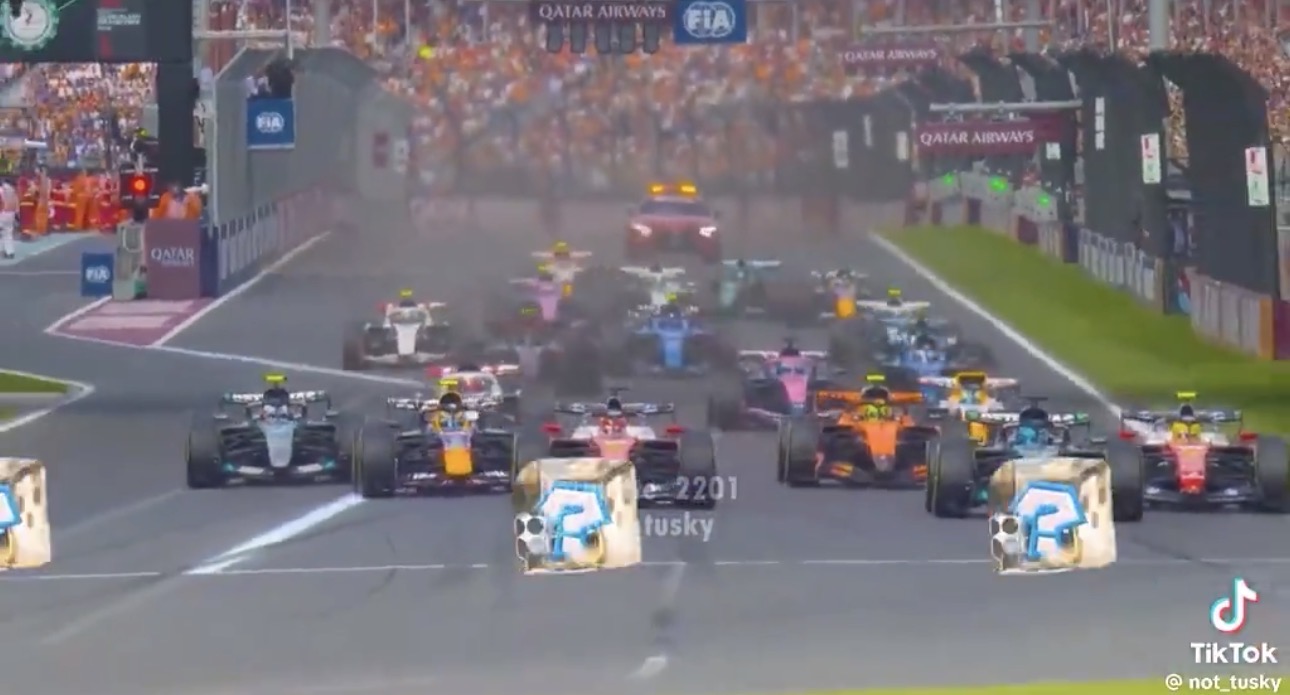
No, Formula 1 has turned into a kind of Mario Kart, where you take turns using a “mushroom” to pass someone on a straight. The Formula 1 of screaming V10s and brutal overtakes is definitively gone.
Less battery, more racing
Formula 1 is now far too influenced by everything surrounding the sport, with the drivers themselves being the exception. The new battery rules were introduced mainly to please manufacturers like Audi and Ford, and to create more “action” for the Drive to Survive audience. That became painfully clear when F1 posted a shameless graphic after the race about the number of overtakes, which, ironically, was still lower than Formula E in Monaco.
The only real positive about the new cars is that they’re smaller and feature variable aerodynamic modes: on the straights the front wing drops and the rear wing opens, similar to DRS, and in the corners the opposite happens. But that’s about it.
Instead of obsessing over battery rules and artificial boosts to create “spectacle,” Formula 1 should focus on what can be improved off the track. Start with the calendar: stop flying back and forth between the Middle East and America as if it’s nothing. Use sustainable fuels for logistics. And because F1 prides itself on innovation, that same innovation should apply to everything outside the racing itself, logistics, hospitality, VIP villages.
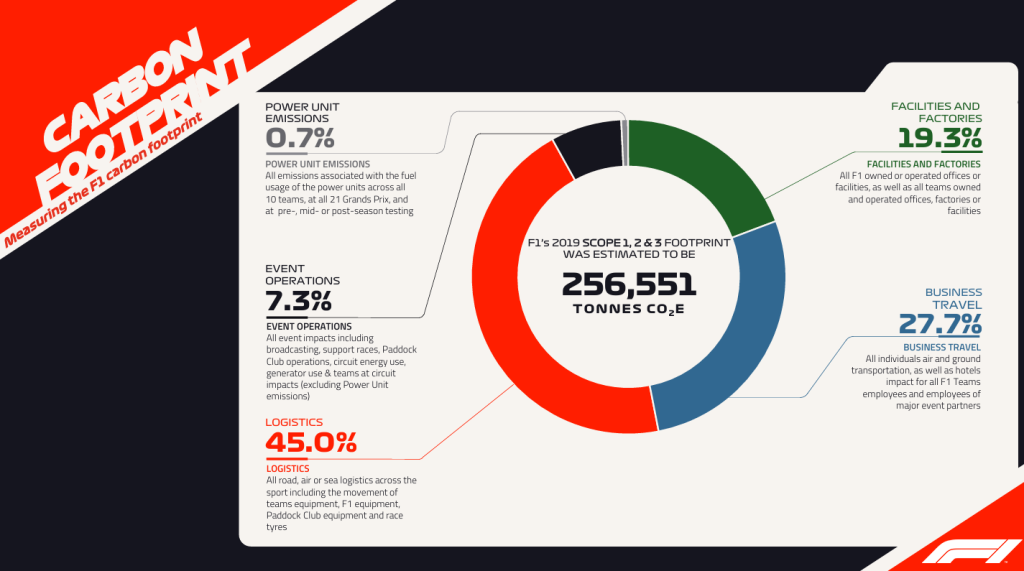
According to F1’s own 2019 sustainability report, over 70% of total emissions come from logistics and hospitality, while the power units in the cars account for just 0.7%. The problem isn’t the engines, it’s everything around them.
If Formula 1 truly wants to become more sustainable and maintain sporting quality, it must stop relying on artificial battery rules and gimmicks. Less battery means more racing. The real progress won’t come from pleasing new fans and manufacturers, but from organizing the sport more intelligently.
Only if F1 dares to make those choices can it return to being the forward‑thinking, pure, and uncompromising motorsport it once was.
And for fans who do enjoy this style of racing. Formula E already exists.
 arendbrandsma
  Steven Boekema
  sarahvanaken